I grew up thinking of San Jose as one city. It isn’t, not really, not when it comes to something as basic as the air.
I started looking into why after learning that neighborhoods along highway corridors here, places like Mayfair and Alum Rock in East San Jose, have some of the worst air quality in the region, while neighborhoods like Willow Glen and Almaden Valley, further from the freeways, don’t. I wanted actual numbers, not just a general sense that this was true.
The numbers were worse than I expected. A block by block air quality study across the Bay Area, conducted by the company Aclima using sensor equipped cars, found that 81.2 percent of Santa Clara County residents of color live in areas with unsafe levels of nitrogen dioxide, a gas that comes mostly from vehicle exhaust. Almost 95 percent breathe harmful particle pollution in their own neighborhoods. This isn’t a small gap between two ends of a spectrum. It’s most of the county’s people of color living somewhere the air itself works against them.
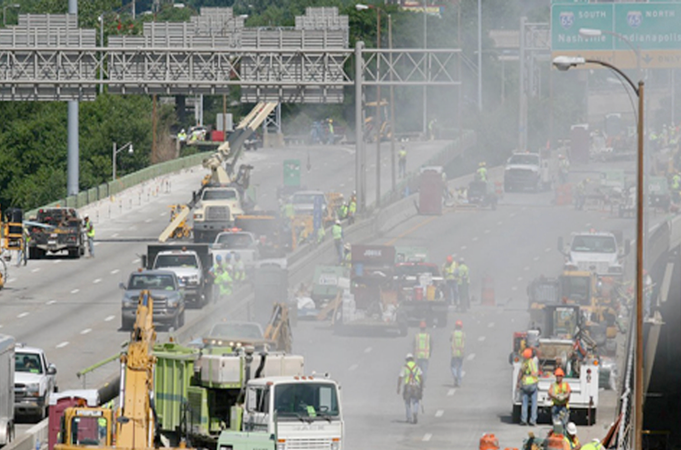
Richard Lam, a meteorologist with the Bay Area Air Quality Management District, has said the Santa Clara Valley consistently has worse air than nearly every other zone the district monitors, worse even than the North Bay’s refinery corridor. Geography plays a role, since the valley traps pollution rather than letting wind clear it out. But geography doesn’t decide who lives closest to the highways that generate a lot of that pollution in the first place. Housing costs do.
A few miles north, in East Palo Alto, the nonprofit Sustainable Silicon Valley has documented child asthma rates 2.5 times higher than the national average in a city that borders a freeway. That’s not a coincidence dressed up as a statistic. Kids who live closer to highways breathe more of what comes off those highways, and their lungs are still developing while it happens.
One proposed fix that actually has research behind it is planting dense vegetation buffers between highways and homes. A federally funded field study in Atlanta found that a real vegetation barrier, not just a strip of grass, reduced black carbon levels behind it by 37 percent compared to open ground. Other studies have found smaller effects, sometimes closer to 12 percent, depending on the density and type of plants used and which pollutant gets measured. The range matters. A vegetation buffer is a genuinely useful tool, backed by real field data, not a symbolic gesture that happens to look nice from the freeway.
None of this fixes itself with a tree planting event. It requires funding home retrofits for air filtration, actually enforcing the equity policies San Jose has already adopted on paper, and admitting that a twelve mile drive across this city can mean a measurably different set of lungs by the time you’re forty.
Zip code shouldn’t be a health outcome. Right now, in my own city, it is.
Sources. Aclima air quality study, Bay Area; Lam, R., Bay Area Air Quality Management District; Sustainable Silicon Valley; Atlanta vegetation buffer field study.