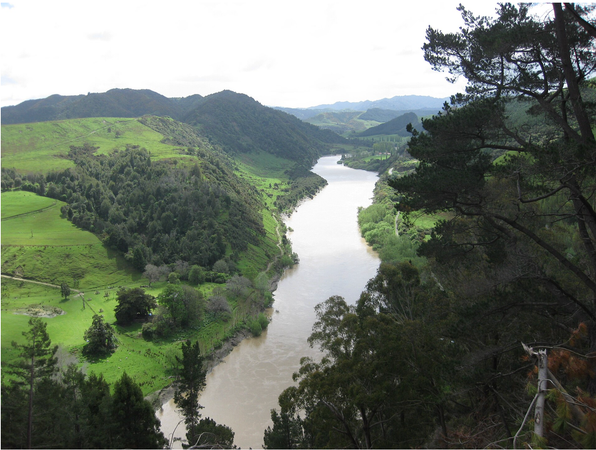
I wrote a Declaration of Rights for Coyote Creek this week, modeled on the 2017 New Zealand law that made the Whanganui River a legal person. That case has become the go to example anyone reaches for when arguing nature should have legal standing. Recent research on what actually happened in Whanganui after the law passed complicates the story I’d been telling.
The Te Awa Tupua Act did make history. It declared the river an indivisible and living whole, from the mountains to the sea, and gave it two guardians, one appointed by local Maori iwi and one by the government, empowered to speak on its behalf in legal proceedings. The settlement followed close to 150 years of the Whanganui iwi fighting for recognition of the river as an ancestor, not a resource.
A 2024 study by researchers Miriama Cribb, Elizabeth Macpherson and Axel Borchgrevink, published after dozens of interviews conducted within Whanganui itself, found something the international coverage mostly missed. Almost all prior scholarship on the case had come from outside New Zealand and focused overwhelmingly on the legal personhood innovation itself, the headline grabbing part. Almost nothing had examined how the law actually functioned on the ground. Their fieldwork found a shift away from legal personhood as the operative mechanism and toward the centrality of Maori kawa, meaning value based, indigenous law, working through a collaborative governance framework involving iwi, government, community and industry groups, guided by a shared set of principles called Tupua te Kawa.
In plain terms, the actual work of protecting the river hasn’t mostly happened through court cases invoking its legal personhood. It’s happened through slower, less headline friendly collaborative governance structures built on relationships and shared values, the exact kind of work that doesn’t summarize well into a single dramatic sentence about a river becoming a person.
That doesn’t mean the legal personhood status was symbolic or empty. It created the legal foundation and political leverage that made the collaborative structures possible in the first place, and it forced decision makers to formally recognize the river’s health as a legitimate factor in planning documents. But if I model a Coyote Creek proposal purely on the international headline version of Whanganui, a river becomes a person and everything changes, I’d be copying the part that photographs well while missing the slower governance work that researchers inside Whanganui found actually does the protecting.
A Coyote Creek Guardianship Council, if it’s going to mean anything, needs the same thing Whanganui eventually built, an ongoing, collaborative structure with real decision making power, not just a declaration that sounds good and stops there.
Sources. Cribb, M., Macpherson, E., and Borchgrevink, A. (2024 study on Te Awa Tupua Act implementation).