I priced out Fair Trade chocolate against conventional bars this week and wrote that paying an extra dollar or two literally keeps children out of cocoa fields. I need to walk that back, because the most rigorous data available says the opposite happened over the last decade, even with certification programs in place.
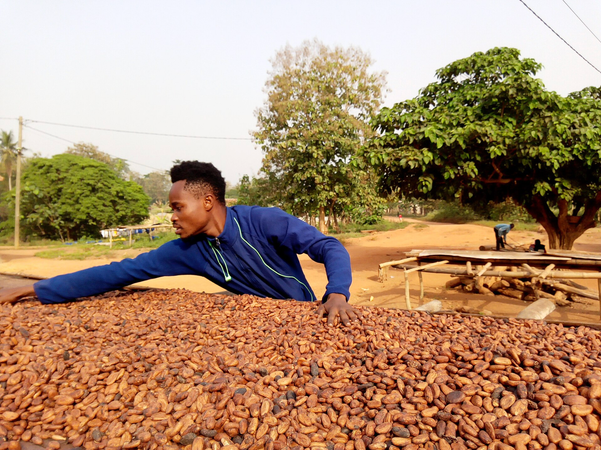
The definitive study here comes from NORC, the National Opinion Research Center at the University of Chicago, working under contract with the US Department of Labor. Over the 2018 to 2019 harvest season, researchers conducted the most extensive in person survey ever done in cocoa growing regions, interviewing 2,809 household heads and 5,552 children directly across Ivory Coast and Ghana, the two countries that together produce close to 60 percent of the world’s cocoa. Their finding: an estimated 1.56 million children were involved in cocoa related child labor in 2018 and 2019, with about 1.48 million of them, roughly 95 percent, in work classified as hazardous.
Here’s the part that should have been the headline everywhere. NORC compared that 2018 and 2019 figure against a 2008 and 2009 baseline, the years before the cocoa and chocolate industry made major public pledges and spent an estimated 215 million dollars on voluntary certification and remediation programs specifically targeting child labor. Over that decade, child labor prevalence among cocoa growing households increased by 14 percent. Hazardous child labor increased by 13 percent. Not decreased. Increased, after a decade of industry spending explicitly meant to bring the numbers down.
NORC’s own accompanying materials are direct about why: cocoa production from Ivory Coast and Ghana grew 62 percent over that period, and the number of households farming cocoa grew 53 percent alongside it. More farms growing more cocoa meant more households where children were available to work, even as certification programs multiplied. The Washington Post, reporting on the release, called it a remarkable failure by leading chocolate companies to fulfill a long standing promise to eradicate the practice from their supply chains.
Some caution is warranted on the exact numbers. A Dutch sustainability group called Solidaridad Network pointed out that earlier widely cited estimates, a 2015 Tulane University figure of 2.1 million children, were later found to be overstated, and cautioned that even NORC’s newer 1.5 million figure may eventually be revised as researchers better understand how to count child labor in farming households where children help with light chores versus genuinely hazardous work. The overall trend line, more children working, not fewer, held up regardless of exactly which number turns out to be most precise.
None of this means certification is worthless or that my extra dollar for Fair Trade chocolate does nothing. It means I can no longer honestly say that dollar is what stands between a specific child and a cocoa field. The industry already tried spending real money on that exact promise, and the number of children working went up anyway.
I still buy the Fair Trade bar. I’ve just stopped telling myself I know what it’s actually accomplishing.