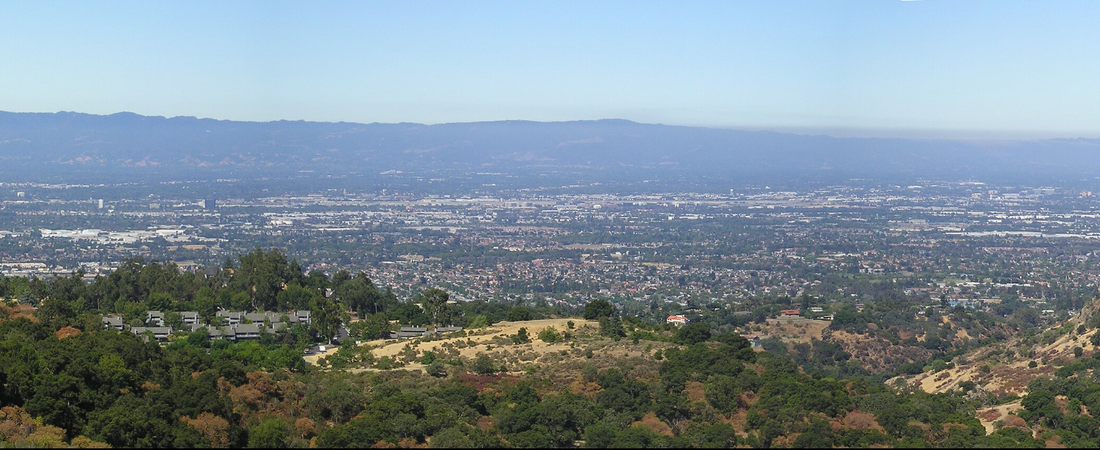
I praised Our City Forest this week for planting more than 75,000 trees across San Jose with a 93 percent survival rate, framing it as a model of awareness turning into real, measurable impact. The organization’s numbers are real. What I left out is that they’re happening inside a citywide trend running in the opposite direction, and a new government watchdog report makes that gap hard to ignore.
The 2025-2026 Santa Clara County Civil Grand Jury reviewed the city’s own canopy data and found San Jose’s overall tree coverage has been shrinking for over a decade, from 15.4 percent in 2012, to 13.5 percent in 2018, to 13.2 percent by 2020. That’s not a plateau. That’s a steady decline, happening across the same years Our City Forest was actively planting tens of thousands of trees. The two facts aren’t contradictory, they’re describing different scales, one nonprofit’s plantings against citywide removals, development, and tree loss that has been outpacing the new growth.
The grand jury’s findings go further than just the raw numbers. San Jose adopted a formal goal in its 2022 Community Forest Management Plan to reach 20 percent canopy cover, and the jury found the city will fall far short of that target unless it and its partners plant significantly more trees than they currently are, with no real urgency reflected among the officials interviewed. The jury also found the city has no contingency plan for what happens if it keeps falling behind, and, in a detail that reads almost as a footnote but says a lot, that the city’s own forestry website misstates its own goal, listing the wrong percentage and the wrong target year.
Rhonda Berry, CEO of Our City Forest, has been blunt about what’s at stake when canopy disappears. Being outside without shade, she’s said, is basically inhaling tires, since trees filter out the fine particulate pollution that vehicle exhaust and tire wear leave behind. Her organization’s Cool and Green Communities initiative specifically targets neighborhoods flagged by the state’s CalEnviroScreen tool as already overburdened by pollution, offering free trees and planting services there first. That targeting is exactly right. It also can’t outpace a citywide loss rate on its own.
I also want to flag that Our City Forest’s own public figures shift depending on the source and the year, 75,000 trees in some materials, more than 100,000 in others, a 90 percent survival rate in one place and 93 percent plus in another. That’s not necessarily a red flag, nonprofit tracking data updates over time and different documents get published at different moments. But it means I should have cited a specific source and date for the number I used instead of repeating a round figure that’s already floating around in slightly different versions.
None of this makes Our City Forest’s work less real. Planting a tree that survives three years of drought stress in Silicon Valley heat is genuinely hard, skilled work, and 75,000 or 100,000 successful plantings is a serious achievement either way. What I got wrong was the framing, presenting one organization’s growth as proof the system itself was working, when the city’s own watchdog report says the system, at the scale that actually matters for a 20 percent canopy goal, currently isn’t.
Sources. Santa Clara County Civil Grand Jury (2025-2026 report); Berry, R., Our City Forest; City of San Jose Community Forest Management Plan (2022).