I wrote a letter this week, an actual letter, to Senator Alex Padilla, asking him to push harder on federal forest protection and to fight for California’s remaining old growth against logging. I could have signed a petition in ninety seconds. I spent almost an hour on this instead, and I wanted to know if that time was actually worth anything before I sent it.
Turns out it probably was. Research from the Congressional Management Foundation, which surveys congressional staffers directly about what actually moves them, found that 90 percent of staffers say handwritten, personalized letters carry real influence with the lawmakers they work for. Personalized emails aren’t far behind, with 88 percent of staffers saying those matter too. Form letters and mass petitions, the kind you sign in ninety seconds, land at only 51 percent. Not nothing. Just a lot less.
The reason, according to the same research, isn’t really about the words themselves. It’s about what the act of writing signals. A staffer quoted in a Vanderbilt University study on this exact question put it plainly: someone willing to sit down and write their own letter is probably also willing to act in other ways, talking to neighbors, showing up at town halls, actually voting on this issue specifically. A click on a petition site doesn’t prove any of that. A letter, even a short one, kind of does.
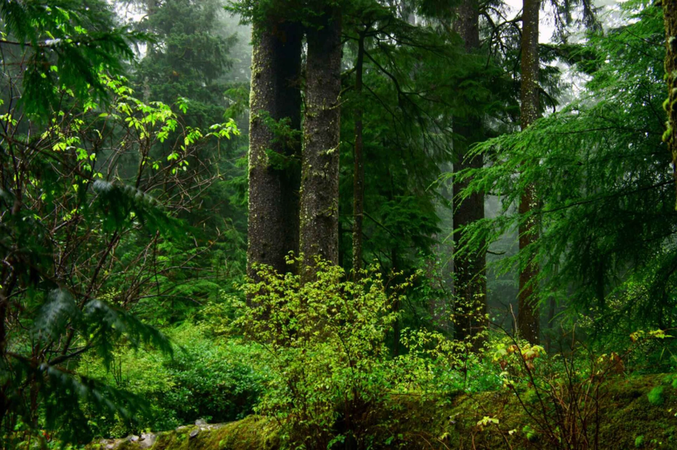
I picked old growth forests specifically because I found a case close to home that made the abstract argument concrete. Jackson Demonstration State Forest, 48,652 acres of coast redwood in Mendocino County, doesn’t currently count toward California’s 30×30 conservation goal, even though it’s state owned land. It doesn’t qualify because Cal Fire still manages it as commercial timberland, selling timber harvest plans to private logging companies most years. Cal Fire stopped cutting the oldest first growth trees, which is something. But it still harvests mature second growth trees, some more than a hundred years old, in a forest that’s also home to endangered coho salmon and the northern spotted owl.
That’s the kind of detail that doesn’t show up in a form letter, because a form letter doesn’t have room for it. My letter did, and I think that’s the actual point of writing one instead of signing something premade.
On the bigger number, I also had to correct something I’d been repeating without checking. I’d assumed the world, and California specifically, was still stuck near 17 percent land protection under the 30×30 framework. That’s out of date. As of June 2025, California has conserved 26.1 percent of its lands, according to the state’s own progress report, up from about 24 percent when the initiative launched in 2020. That’s real, measurable progress, even if it’s not the full 30 percent yet, and even if places like Jackson Demonstration still sit outside the count.
None of that means my one letter changes federal forest policy by itself. It probably doesn’t. But the research suggests it’s not nothing either, and nothing was the alternative I was actually choosing between: write the letter, or don’t write anything at all.
I sent it.