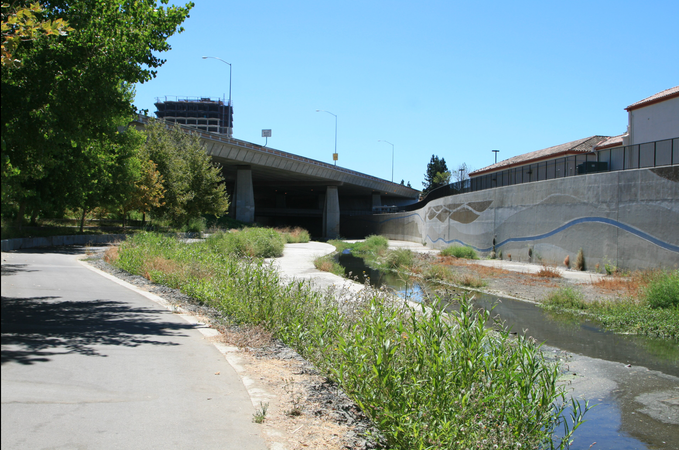
I’ve walked along the Guadalupe River in downtown San Jose more times than I can count without knowing its original name. In the language of the people who lived along it before Spanish colonization, it’s called Thamien Rummey. That name comes from the Tamien Nation, whose ancestral villages once stretched from the Guadalupe River watershed through the Santa Clara Valley, land that includes most of the city I grew up in.
For 235 years, the Tamien Nation held none of that land in tribal ownership. That changed this year. Using a 6 million dollar grant from the California Governor’s Office Tribal Nature Based Solutions program, the Tamien Nation acquired 235 acres of its ancestral homeland in East San Jose, the first time in more than two centuries that land in the South Bay has returned to full tribal ownership, governed and protected entirely by the Tamien Nation itself.
Chairwoman Quirina Luna Geary described the moment in terms that go beyond a real estate transaction. This moment is more than a land acquisition, she said. It is a homecoming. It is an act of restorative justice. It is the rekindling of our sacred, reciprocal relationship with the land. After generations of removal and dispossession, we are returning home.
I want to correct something I got wrong before researching this, something I suspect a lot of people in San Jose get wrong too. I had been treating Muwekma Ohlone and Tamien Nation as basically interchangeable names for the same community. They aren’t. The Tamien Nation is explicit about this on its own website: we are Tamien, not Ohlone. The two are distinct tribes with separate political structures, separate cultural identities, and a long standing agreement respecting each other’s defined territorial boundaries. Muwekma Ohlone’s ancestral territory and Tamien Nation’s overlap in parts of the South Bay, but treating them as one group erases a real, specific difference both tribes have worked to maintain.
Neither tribe currently holds federal recognition, which matters more than it might sound like. Federal recognition determines eligibility for a wide range of protections and resources, land trust status, healthcare funding, formal consultation rights on projects affecting ancestral land. The Muwekma Ohlone Tribe has spent decades fighting specifically for that recognition, a process that remains unresolved. The Tamien Nation’s new 235 acres came through a state grant, not federal action, which is itself a sign of how much groundwork happens outside a federal recognition process most Americans assume is the only path to any of this.
The history behind why this land needed to be reacquired at all is not abstract or distant. Between 1776 and 1836, Spanish colonization and the mission system devastated Ohlone and Tamien communities in the Bay Area. During the California gold rush era, the state’s first governor called for the extermination of Indigenous peoples outright, a policy position, not a metaphor. Population estimates for the broader Ohlone family of tribes dropped from around 30,000 people to as few as 62 by some counts. The Tamien Nation and Muwekma Ohlone people never left this land through all of it, continuing ceremonies, continuing language, continuing to exist in a region that spent a long time acting as if they didn’t.
The 235 acres are meant to become what the tribe describes as a living cultural landscape focused on climate resilience and ecological restoration, not a museum piece or a symbolic gesture. That framing matters. Land acknowledgment statements, the kind read before city council meetings or printed at the bottom of a webpage, are often where this conversation starts and stops. This is what it looks like when it goes further than a statement.
I don’t think one land acquisition undoes 251 years of dispossession, and I don’t think the Tamien Nation is claiming it does either. But I do think I’ve spent years walking a trail named after a river whose real name I never bothered to learn. That’s a small thing to fix, compared to 235 acres. It’s still worth fixing.