Wellness lists love throwing out foreign words for feeling good. Danish hygge, Swedish fika, Mediterranean siesta. The one that actually stopped me was Japanese, shinrin-yoku, forest bathing, mostly because it turns out to be the only item on most of these lists with two decades of a single researcher’s blood work behind it.
Dr. Qing Li, an immunologist at Nippon Medical School in Tokyo, has been studying forest environments since 2004. His hypothesis at the start was straightforward, stress suppresses immune function, forests seem to reduce stress in most people, so maybe time in a forest measurably changes immune function. He’s spent twenty years testing that idea, and by his own account, the results held up. Time in a forest increases natural killer cell activity, the type of white blood cell that helps the body fight off viruses and tumors, along with the level of anti-cancer proteins those cells produce. In some of his studies, the effect lingered for roughly thirty days after a single forest trip, not just during it.
Li’s research also documented lower blood pressure, reduced levels of stress hormones like cortisol and adrenaline, and a shift toward parasympathetic nervous system activity, the body’s rest and digest state, as opposed to the fight or flight sympathetic response most of us live in by default during a normal week.
I want to be straightforward about the limits here, because Li’s own field acknowledges them. A lot of the underlying research comes from a relatively small number of studies, several from Li’s own research group specifically, and many are observational or small pilot studies rather than large randomized trials. That doesn’t mean the findings are wrong. It means forest medicine, the name Li’s team gave this discipline, is still a young enough science that its confidence intervals are wider than the confident magazine headlines about it suggest.
What struck me more than the biology was something Li said about his own hypothesis before he’d tested it, it was common sense, he said, that spending time in a forest, which people perceive as relaxing, might reduce stress, and that reduced stress might then support immune function. He built two decades of research on a hunch anyone might have had standing in a forest. The difference is he actually went and measured it.
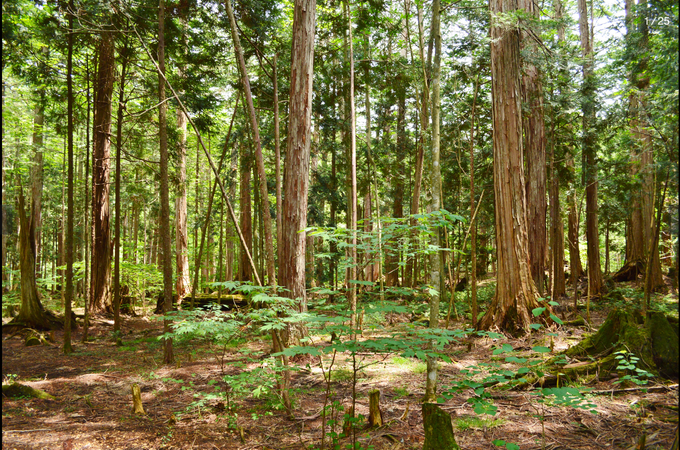
Shinrin-yoku isn’t hiking with a health benefit attached. The practice, coined in Japan in the 1980s as a public health campaign, is deliberately about doing less, not more. No fitness goal, no summit, no pace to keep. Walk slowly. Notice the bark, the light through leaves, the smell after rain. Sit if you want to. The birthplace of the practice, Akasawa Natural Recreation Forest in Nagano, is a stand of Japanese cypress trees, some over 300 years old, protected under a forest conservation policy dating back roughly 400 years, long before anyone thought to measure what the forest was doing to the people walking through it.
I’m not going to pretend a walk in the woods replaces medicine. But it’s rare to find a wellness trend with an actual named scientist’s two decades of blood samples behind it instead of just a nice sounding foreign word. This one has that. It’s also, unlike most items on a wellness list, completely free.
Sources. Li, Q., Nippon Medical School (forest medicine research since 2004).