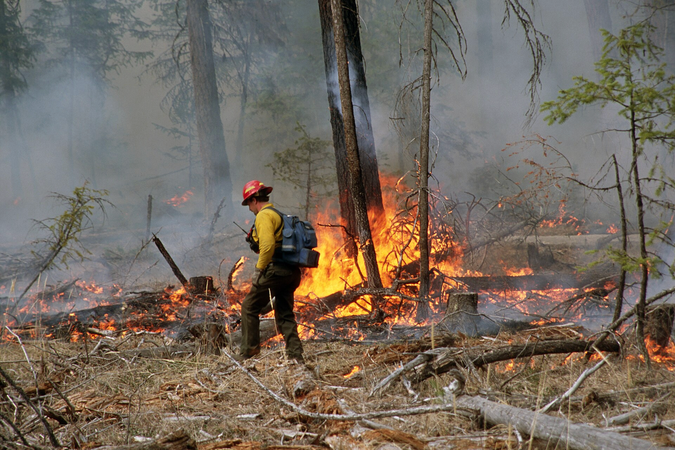
Ron Goode, chairman of the North Fork Mono Tribe, once stood over a patch of brush that hadn’t burned in about 120 years. He said the plants were crying. That’s not a metaphor he uses loosely. For Goode and other California tribal fire practitioners, fire isn’t destruction. It’s a tool the land has been denied for a century, ever since fire suppression policy treated every fire, regardless of purpose or intensity, as an emergency to put out.
In 2022, California passed two bills, Senate Bill 332 and Assembly Bill 642, that lifted the practical restrictions on cultural burning that had stood for roughly a century. The laws reduced the liability and permitting barriers that had kept tribes from legally setting the kind of small, deliberate fires their ancestors used to manage the land, fires aimed at reviving specific plants, clearing specific brush, restoring a working relationship between people and place rather than just reducing fuel loads for wildfire prevention.
It sounded, when it passed, like a turning point. The actual numbers since then are much smaller than that framing suggests. According to a 2024 Save the Redwoods League report, only two off reservation cultural burns have taken place in the entire giant sequoia range since the restrictions were lifted, a demonstration burn at Alder Creek Grove and an earlier burn led by the Tule River Indian Tribe on Forest Service land. Two burns, in over three years, across one of the most fire adapted, historically fire managed ecosystems in California.
The gap between the law changing and the practice actually happening comes down to something Beth Rose Middleton Manning, a UC Davis professor who studies this exact issue, described plainly, agencies will often tell tribes they understand a plant needs burning to stay healthy, but that the tribe doesn’t have the right certification to do the burning themselves, so agency staff will burn instead, and the tribe can watch. For a practice built on generational knowledge and specific, place based relationships with the land, being told to watch someone else do it defeats much of the point.
California separately set a goal in 2022 of reaching 25,000 acres of prescribed and cultural burning annually by 2025, conducted by tribes, cultural fire practitioners, and others combined. As of the most recent reporting available, the state has not released data confirming whether that target has been met.
None of this means the 2022 laws accomplished nothing. They removed a real legal barrier, and Goode himself has pointed to the smaller, specific nature of these burns as part of what makes them work, he describes cultural burns as never bigger than what he calls a big beaver hut, intentionally modest, intentionally controlled, closer to tending a garden than fighting a wildfire. Shine Nieto, vice chairman of the Tule River Indian Tribe, put the underlying logic simply, the cultural burn works because our people have been doing it for centuries and centuries. That knowledge didn’t disappear during the century it was restricted. It just wasn’t allowed onto the land.
The law changed in 2022. The land, mostly, is still waiting.
Sources. Goode, R., North Fork Mono Tribe; Middleton Manning, B.R., UC Davis; Save the Redwoods League (2024 report); Nieto, S., Tule River Indian Tribe.