Something like half the oxygen in every breath I take doesn’t come from trees. It comes from the ocean, from phytoplankton so small you’d need a microscope to see one. A Scripps Institution of Oceanography study put actual numbers on part of that process in 2023, a single enzyme these tiny organisms use accounts for somewhere between 7 and 25 percent of all oxygen produced in the ocean. Lead researcher Daniel Yee framed it simply, take ten breaths, and roughly one of them exists because of a mechanism inside a cell too small to see with the naked eye.
I didn’t expect an oxygen statistic to make coral bleaching feel more urgent, but it did. The ocean isn’t just scenery. It’s running a life support system I’m plugged into every time I inhale.
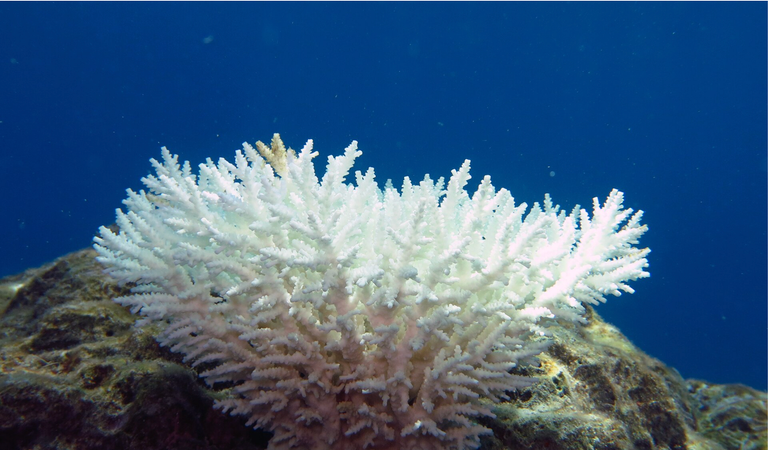
Coral bleaching itself is more specific than I realized. It’s not that the coral just dies from heat. Warm water stresses the coral until it expels the algae living inside its tissue, the same algae that give coral its color and, more importantly, feed it through photosynthesis. Without the algae, the coral turns white and starts starving. It isn’t dead yet at that point. It’s just extremely vulnerable, and everything about its situation is about to get worse.
That’s where the sunscreen part gets strange. I’d always assumed oxybenzone, a common sunscreen ingredient several places have banned near reefs, was directly toxic to coral, the way a chemical spill might be. A 2022 Stanford study published in Science found something stranger. Coral and its close relative, sea anemones, don’t get poisoned by oxybenzone directly. They metabolize it, the same way your body processes a medication, and in trying to break the chemical down and clear it out, they accidentally manufacture a new compound that turns toxic the moment sunlight hits it. The coral poisons itself trying to protect itself.
Lead author Djordje Vuckovic put it plainly, it would be a sad irony if tourism built around protecting coral reefs ended up accelerating their decline. And the mechanism gets worse for already bleached coral specifically, since the study found that healthy coral’s symbiotic algae can absorb and contain the toxin, shielding the coral tissue from most of the damage. Bleached coral has already lost that algae. It has no shield left, right at the moment it’s most exposed.
So bleaching and sunscreen chemicals aren’t really two separate reef problems happening at the same time. They compound each other. Warm water strips coral of its defense system, and the same chemical that would have been mostly neutralized by that defense system now has a clear shot instead.
None of this makes me want to skip sun protection at the beach. It makes me want to check the label first. Reef safe sunscreens that skip oxybenzone and a related compound called octinoxate exist and work fine. The switch costs nothing except reading the back of the bottle for once instead of just grabbing whatever’s on the shelf.
Sources. Yee, D. et al., Scripps Institution of Oceanography (2023); Vuckovic, D. et al., Stanford University, published in Science (2022).