I priced out Fair Trade chocolate against conventional bars this week, and the environmental footprint behind both surprised me more than the price difference did.
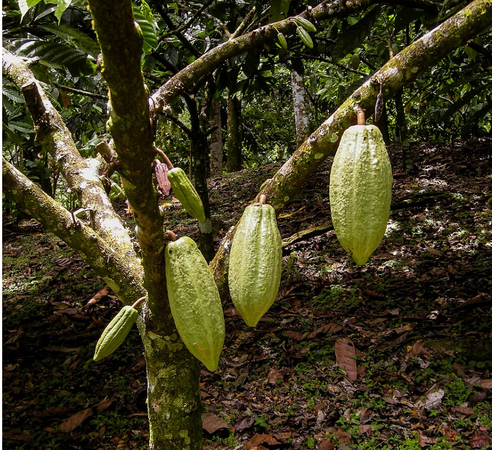
Cocoa production from Ivory Coast and Ghana, which together produce close to 60 percent of the world’s cocoa, grew 62 percent over the decade between 2008 and 2019, according to research conducted under the National Opinion Research Center at the University of Chicago. That expansion came with real land use costs. Cocoa is typically grown in full sun or under a thin forest canopy, and the crop’s rapid growth in West Africa has been linked to significant deforestation pressure in both countries over the same period, as new farmland gets cleared to keep pace with rising global demand.
The water footprint of chocolate is large enough that it rarely makes it onto packaging. Estimates for the water required to produce a single kilogram of chocolate run into the thousands of liters once the full growing, processing, and transport chain is included, a footprint driven mostly by the cocoa tree’s water needs during its multi year growing cycle rather than any single step in manufacturing.
Certification programs, both Fair Trade and other schemes, have increasingly built environmental standards into their requirements alongside their original economic goals, including limits on deforestation and requirements for shade grown cultivation that helps preserve forest canopy and biodiversity within cocoa growing regions. Shade grown cocoa systems, where cacao trees grow under a canopy of taller native trees, have been found in ecological studies to support meaningfully more bird and insect biodiversity than full sun plantations, while also reducing soil erosion and water runoff.
None of this changes my Fair Trade purchase. It does mean I’m reading the label differently now, less as a complete guarantee and more as one piece of a much larger environmental picture that a bar of chocolate doesn’t otherwise disclose.
Sources. National Opinion Research Center, University of Chicago (cocoa expansion data); shade-grown cocoa biodiversity research.