My brother and I tracked our household’s food waste for 24 hours this week, mostly to see the number for ourselves. I knew food waste was bad for the climate in some general way. I didn’t know exactly why until I looked past the food itself and into what actually happens once it hits a landfill.
In October 2023, the EPA published the first ever peer reviewed national estimate of exactly how much methane specifically comes from food waste in landfills, as opposed to landfill waste generally. The number, 58 percent of all fugitive methane emissions, meaning the methane that actually escapes into the atmosphere, from municipal solid waste landfills nationwide comes from food waste alone. Food waste makes up only about 24 percent of what gets landfilled by weight. It’s responsible for well over half the methane.
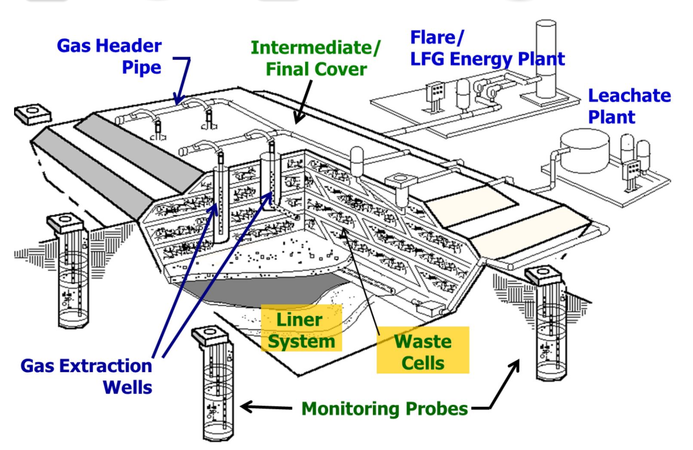
The mismatch has a specific cause. Food decays fast compared to almost everything else thrown away. Landfills capture some methane using gas collection systems, wells and pipes that pull the gas out before it reaches open air, but those systems take time to install and ramp up after waste is buried. Because food breaks down so quickly, most of its methane escapes during exactly the window before collection systems are fully active. The EPA estimates 61 percent of the methane generated specifically by landfilled food waste is never captured at all.
The scale, once converted into something comparable, is hard to hold in your head normally. The EPA’s report found landfilled food waste produced about 55 million metric tons of carbon dioxide equivalent methane in 2020 alone, an amount one analysis compared to the annual emissions of roughly 15 coal fired power plants. That’s not food waste as a symbolic climate issue. That’s food waste functioning as a specific, quantifiable, named source on par with pieces of fossil fuel infrastructure.
Methane itself is part of why the number matters so much more than an equivalent amount of food waste sent, say, to compost instead. According to the EPA, methane traps roughly 28 times more heat than carbon dioxide over a hundred year period, and by some measures closer to 80 times more over the shorter 20 year window that matters most for near term warming. A pound of food rotting anaerobically in a landfill does dramatically more near term climate damage than the same pound composted aerobically, where the breakdown process doesn’t generate methane in the first place.
Our own 24 hour count wasn’t really the point anymore by the time I finished this research. The actual lever isn’t just wasting less food, though that helps. It’s getting whatever does get wasted out of the anaerobic conditions of a sealed landfill entirely, into a compost system where the same organic matter breaks down without becoming one of the most concentrated methane sources in the country.
Sources. U.S. EPA (October 2023 landfill methane report).