I researched Fair Trade tea expecting to write something straightforwardly encouraging: buy the certified bag, support fairer wages, done. The most rigorous study I found on the subject complicates that story in a way I wasn’t prepared for.
A team led by Christopher Cramer, professor of the political economy of development at SOAS University of London, spent four years gathering data on Fairtrade certified and non-certified tea and coffee farms in Uganda, and coffee and flower farms in Ethiopia. Their finding, published as Fairtrade, Employment and Poverty Reduction in Ethiopia and Uganda, was not what the label on a tea box implies. Agricultural workers, particularly women, often earned less on Fairtrade certified farms than on comparable small farms that weren’t certified at all. Wages overall were highest on large commercial farms, certified or not.
Cramer’s explanation for the gap centers on where Fairtrade’s design actually focuses its attention. He said Fairtrade has done little to address the wage gap between the poorest workers and the salaries of cooperative leaders or Fairtrade’s own international executives, focusing instead on the price gap between farm gate prices and what supermarkets charge. In plain terms, the certification was built to guarantee farmers a better price for their crop, not to guarantee the hired laborers picking that crop a better wage. Those are different problems, and Cramer’s data suggests the second one has been mostly left alone.
Nicola Frame, then media and PR manager for the Fairtrade Foundation, didn’t dispute the substance when responding to the study. Fairtrade does make an overall positive difference to farmers and workers, she said, but certification cannot fix all of the deeply rooted problems in global supply chains by itself. That’s a fair response, and it matters that Fairtrade didn’t deny the finding.
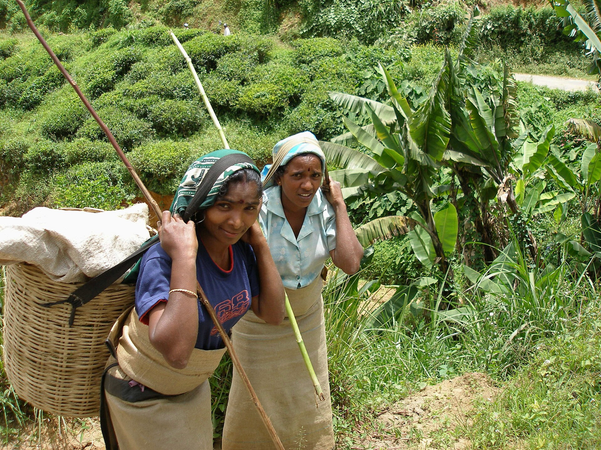
Research specifically on South Asian tea plantations backs up the wage pattern. A review of studies on Fairtrade certified estates in Darjeeling and Sri Lanka found that despite certification, worker wages remained low and insufficient, and that the worker committees meant to give laborers a democratic voice were often effectively controlled by estate management rather than the workers themselves.
None of this means Fairtrade accomplishes nothing. The premium structure, the extra money cooperatives receive and can vote on how to spend, has funded real schools, clinics, and clean water projects in specific communities, and separate research on Fairtrade cocoa cooperatives in Ghana and Ivory Coast has found genuine wage and welfare improvements for cooperative members specifically. The pattern that keeps showing up across studies isn’t that Fairtrade fails everywhere. It’s that Fairtrade tends to help farmers who own their own small plots and are part of a cooperative, while doing much less for hired wage laborers who work someone else’s land, the group least likely to have any bargaining power in the first place.
I’m not switching back to conventional tea over this. I am going to stop describing the Fairtrade label as a guarantee that the person who actually picked my tea leaves got paid fairly. The research says that’s the exact claim it’s weakest on.