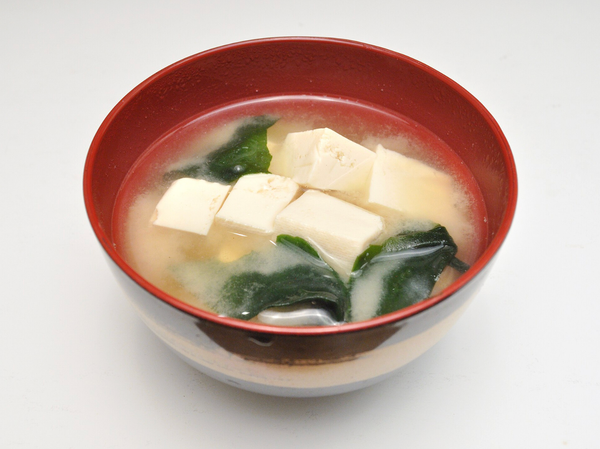
I made a bowl of miso soup with tofu, wakame and spinach last night, telling myself the tryptophan in the tofu would help me sleep. That’s a claim I’ve seen everywhere, tryptophan makes melatonin, melatonin makes you sleepy, therefore tofu before bed equals better rest. When I actually looked into the mechanism, it turned out to be a lot less settled than the wellness posts make it sound.
The complication comes from a researcher at McGill University named Simon Young, who has studied tryptophan and brain chemistry for years. His summary of the evidence is blunt, purified tryptophan, taken as a supplement on an empty stomach, does raise brain serotonin levels. Tryptophan eaten as part of a normal meal, sitting in a bowl of miso soup alongside other proteins, generally does not, at least not reliably. The reason is a competition problem. Tryptophan has to cross the blood brain barrier using the same transport system as several other amino acids, and those other amino acids are usually far more abundant in a typical meal. Tryptophan tends to lose that competition.
This isn’t a fringe opinion. The American Academy of Sleep Medicine, after reviewing the available research, concluded there is insufficient evidence to recommend tryptophan supplements for treating insomnia at all. The National Center for Complementary and Integrative Health goes further, noting the evidence base consists mostly of small clinical trials with real design limitations, and that results across studies have been inconsistent.
That doesn’t mean every piece of the miso soup theory falls apart. Some research does find a connection between tryptophan intake and sleep quality, particularly studies pairing a tryptophan rich breakfast with morning sunlight exposure, which together were linked to higher melatonin production that same night. But that’s a specific timing and context, morning food plus daylight affecting nighttime melatonin, not evening soup working through direct sedation. The mechanism people usually picture, eat tryptophan now, feel sleepy in an hour, has much weaker support than the popular version of the claim suggests.
Magnesium, the other ingredient I’d been crediting in the seaweed and spinach, has better evidence behind it, though even there researchers are careful to note the effect sizes in clinical trials are usually modest, not the guaranteed knockout the word relaxation mineral implies.
I’m not giving up the soup. It’s warm, it’s a nice ritual before bed, and a calming routine has value on its own regardless of the biochemistry underneath it. I’m just no longer going to tell people the tofu is doing the melatonin’s job for it. The research suggests the ritual itself, winding down, eating something warm, signaling to yourself that the day is ending, might be doing more of the actual work than the amino acids are.
Sources. Young, S., McGill University; American Academy of Sleep Medicine; National Center for Complementary and Integrative Health.